Picture watching a clip with the sound off. Could you tell when the worker finished the job and whether it went well? These three illustrations show how we’d think about that question for a proposed recording.
Folding a mailer
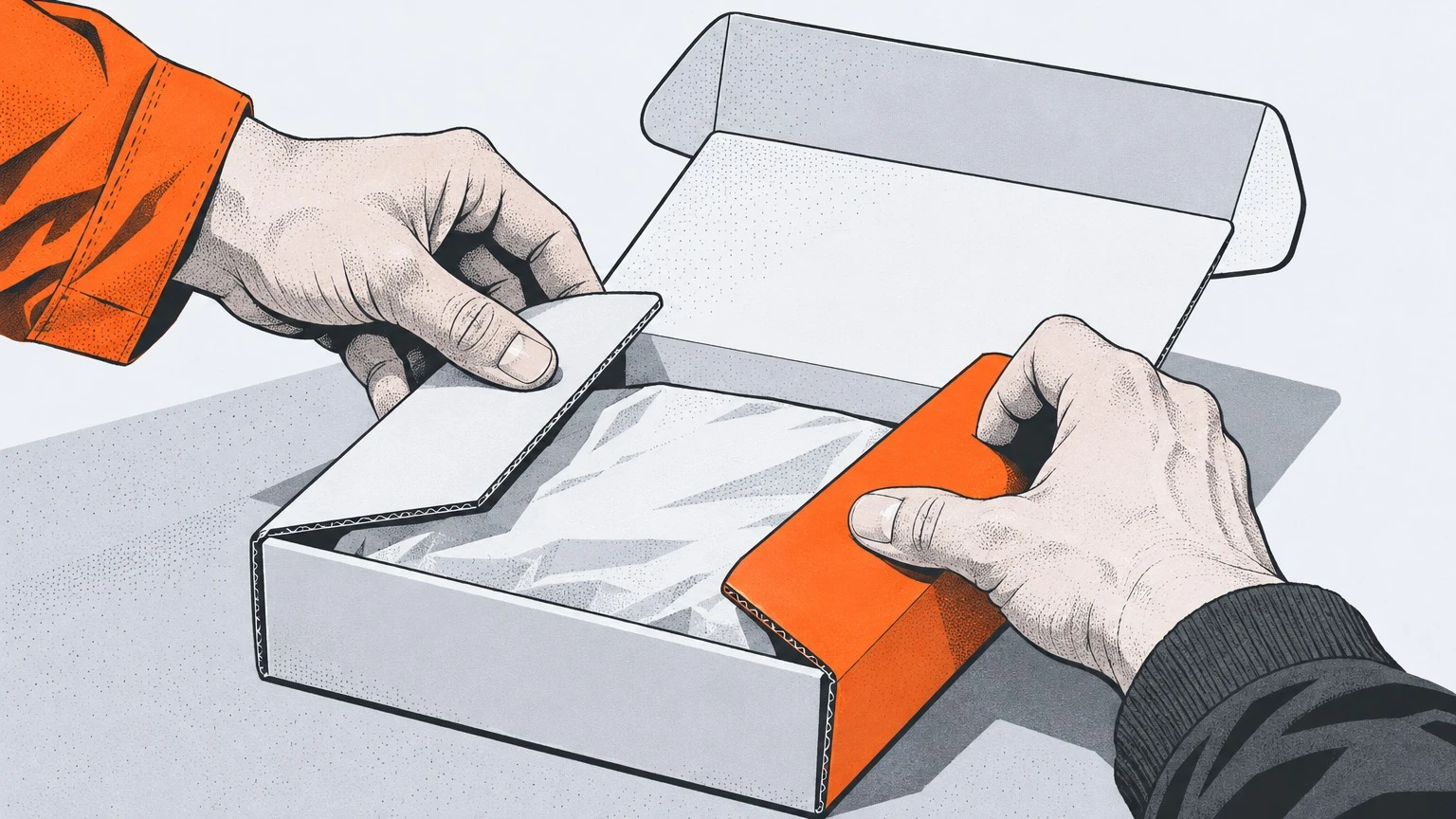
Start with the cardboard blank lying flat. The worker folds the sides up, brings the flaps together and seats the locking tab. A buyer interested in the order of the folds might want to see both hands from the first fold until the box holds its shape.
What the camera might miss
A straight overhead shot can show the outline of the box. Once the near wall stands upright, it might hide the worker’s thumb as the tab goes in. If that last movement is the one the model needs to learn, the request should say so.
Setting up a workstation
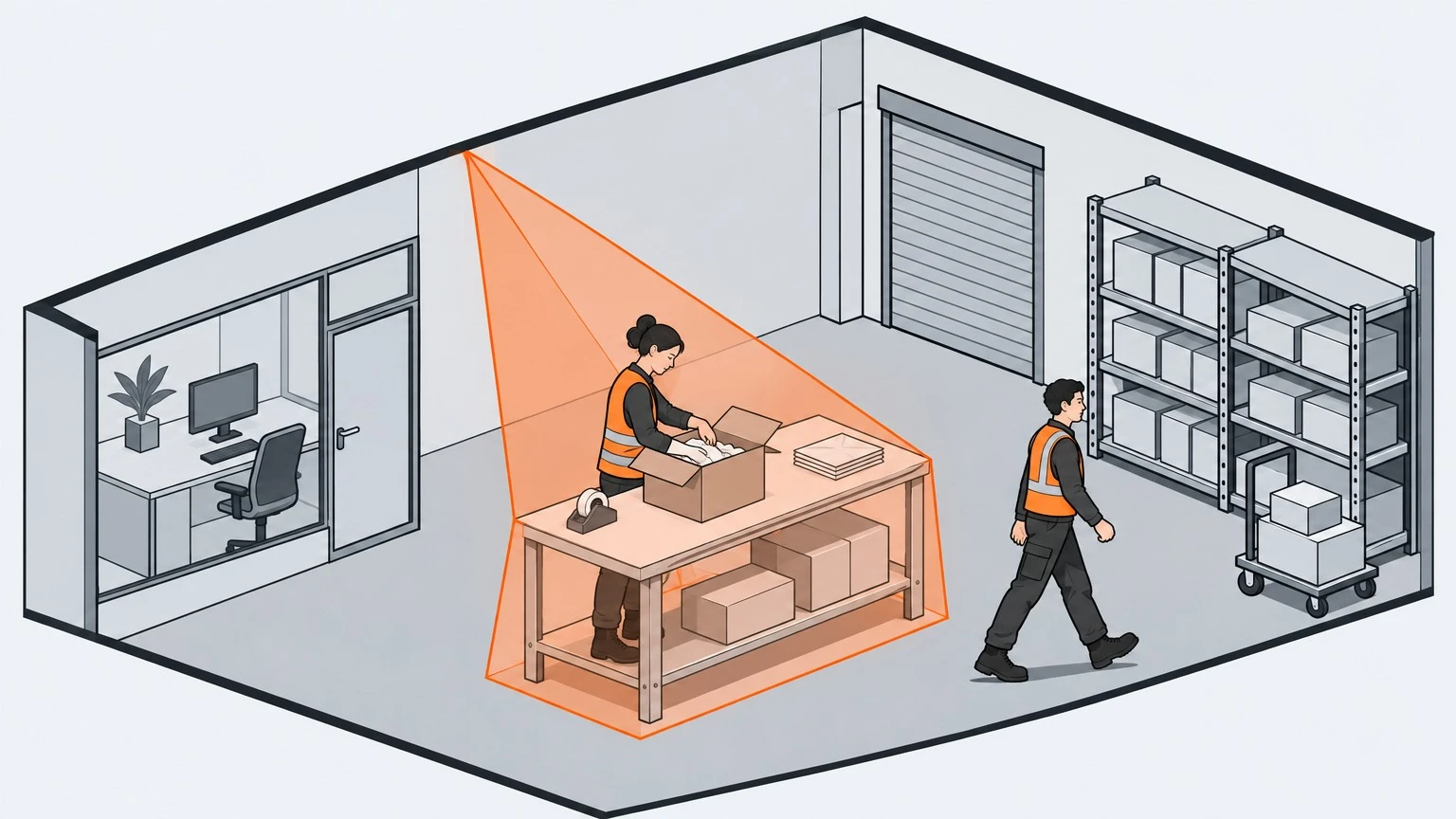
A worker sets out materials for the next job. Here the useful movement may happen between objects. Which piece do they reach for first? Do they turn it around before bringing it to the center of the bench? A fixed view gives the researcher a common reference across several attempts.
Where the shot ends
If the supply bin sits outside the picture, the sequence starts when the part enters the frame. A team studying the reach itself would need a different view. In the illustration, widening the shot could bring the screen or someone passing in the aisle into view.
Checking a part for size
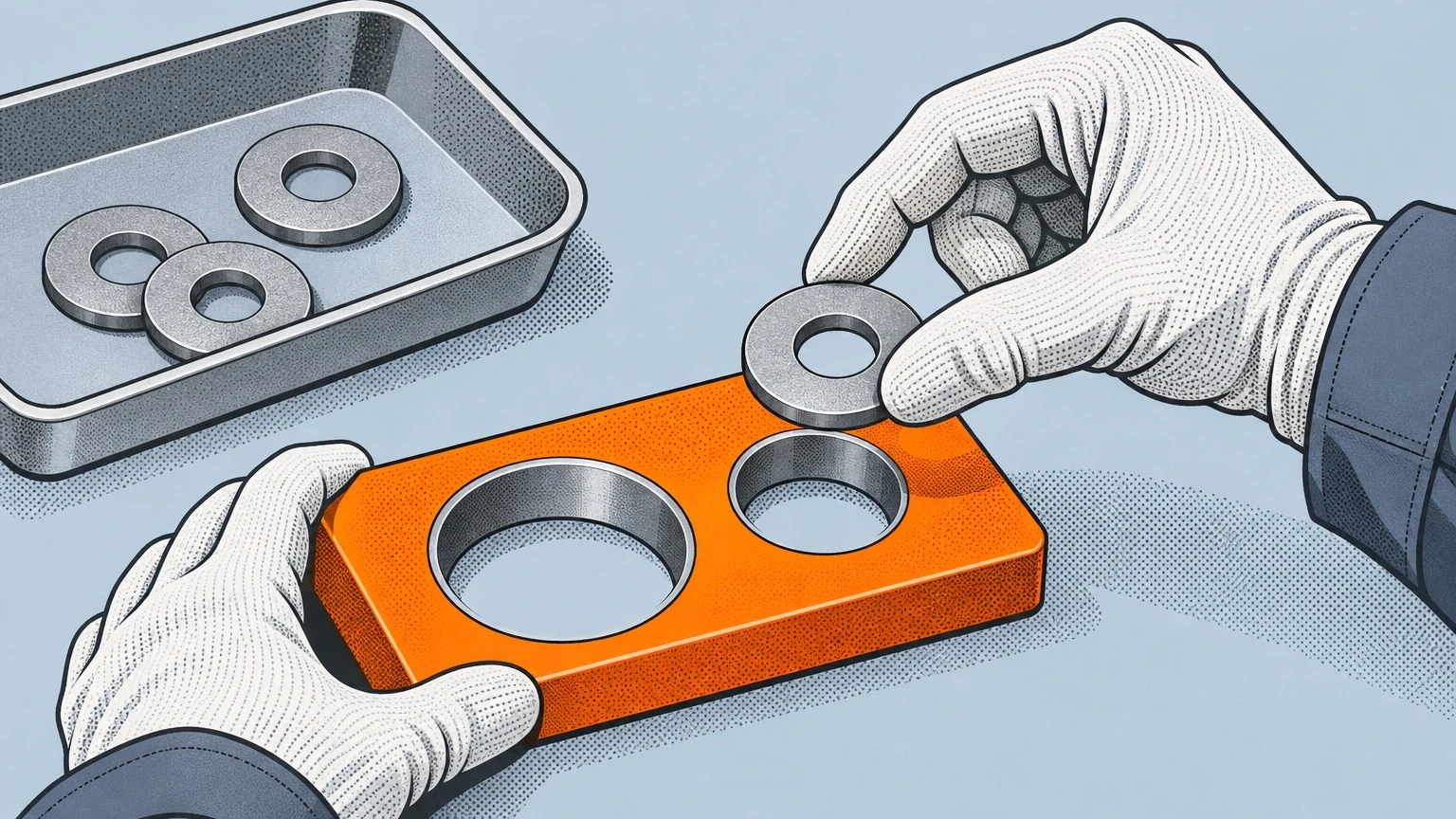
The worker lifts a washer, lines it up with the sizing gauge and checks the fit. From a raised side view, a reviewer can follow the part from the worker’s hand to the gauge. The exact point of contact can disappear behind the worker’s thumb.
What counts as an answer?
If a team wants to recognize a size check, seeing the worker align the part may be enough. If the team wants to tell whether the part passed, it needs a visible result. That might be the worker placing accepted and rejected parts in separate trays, if that is how the site already works.
When the result happens off camera
Some decisions leave very little trace on video. A worker may feel resistance in a fitting and put it aside before there’s any visible movement to distinguish it from a good one. If that judgment matters to your research, tell us how a reviewer would recognize it. Together we can discuss whether the task can answer your question at all.
For a first request, send the task in your own words and say what you hope to learn by watching it. Leave proprietary drawings, customer data and sample footage out of the form.