
Consent & filming
Who gets a say when a camera comes to work?
The site decides whether a camera can come in. The person at the bench decides whether they want to be in the recording. Both decisions matter, even when the task takes only a minute.
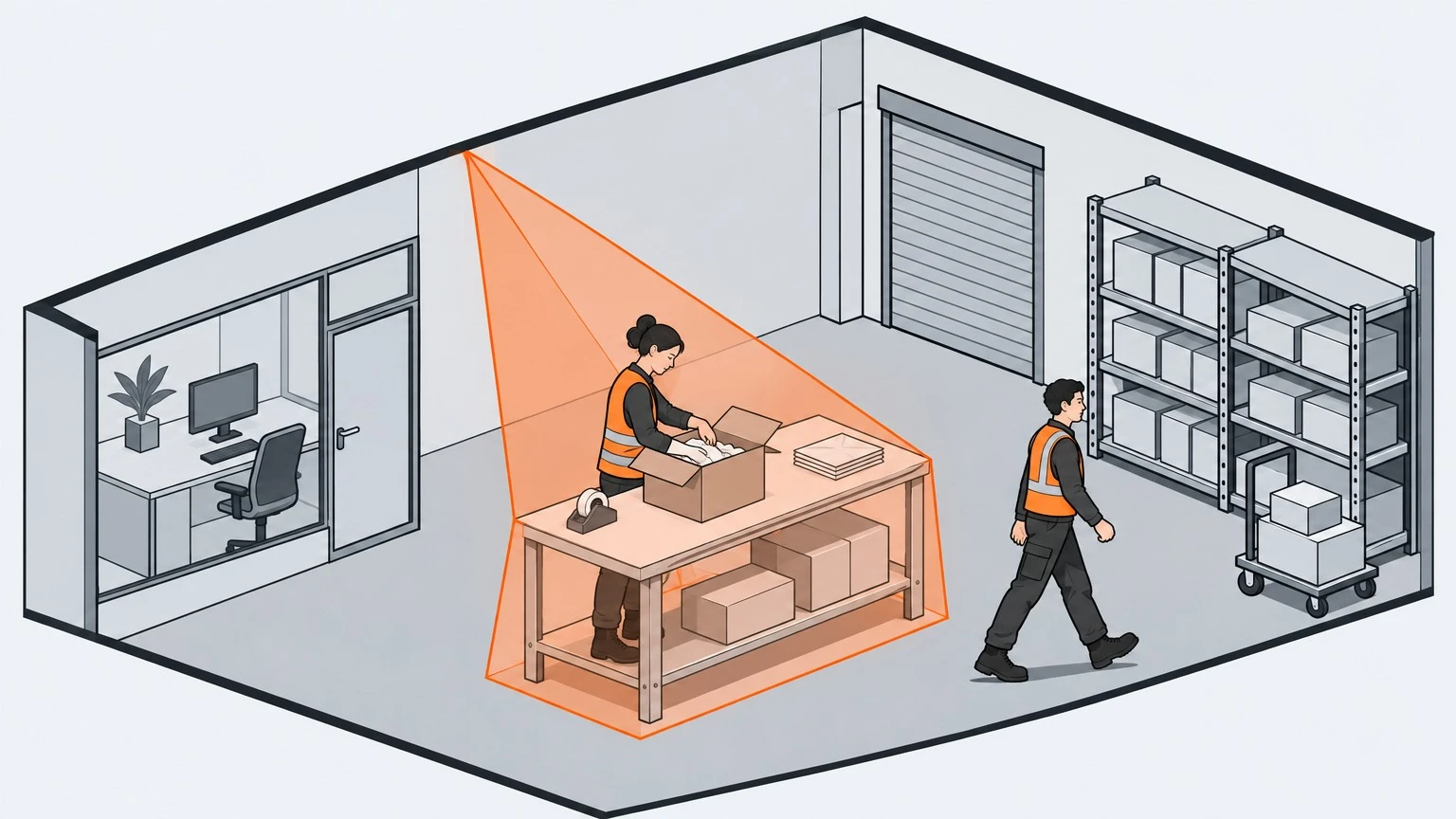
What passes through the shot?
At the bench in the illustration, the frame looks clear. It can change over an afternoon. Someone comes to collect an order. A colleague sets down a delivery slip. A monitor wakes up behind the worker.
When you describe a possible location, mention what moves through it as well as what stays put. A fixed shelf is easy to leave out. A customer who uses the same aisle every few minutes is a different problem. Another bench or a different time of day might work better.
What a manager can approve
A manager may be able to set aside a space or suggest a quieter time. They can also explain site rules someone new to the floor might miss. A whiteboard that looks harmless from across the room might carry the next customer’s name.
The people doing the work need to hear what the buyer is asking for and how the recording would be used. A shift roster tells you who will be there. Permission comes from asking each person who would appear. If someone would rather stay off camera, plan the shot around that choice.
When the plan changes
Suppose a buyer likes the overhead view and asks for a wider one. Moving the camera back could bring a shared tool cabinet or another worker into view. Pause and agree on the new boundary with the people it affects before filming from that position.
If a buyer asks to use existing footage for a different purpose, check what everyone originally agreed to. Get fresh agreement from the site and each person who appears before using the footage for a purpose outside those terms.
Unsure about a particular space?
Describe the issue in words. A photograph of the floor, a staff list or a customer name is unnecessary for an initial inquiry.